King Kong — The Betrayal of Market Garden?
King Kong — The Betrayal of Market Garden?
What we know. What we think we know. What we do not want to know. And what is not true.
On 17 September 1944, Operation Market Garden began. Thousands of Allied paratroopers descended over the Netherlands. Bridges were to be captured, a corridor opened northwards, and ultimately the Rhine was to be crossed at Arnhem.
The plan failed.
And whenever a major military operation fails, a question almost inevitably follows: how did the enemy know?
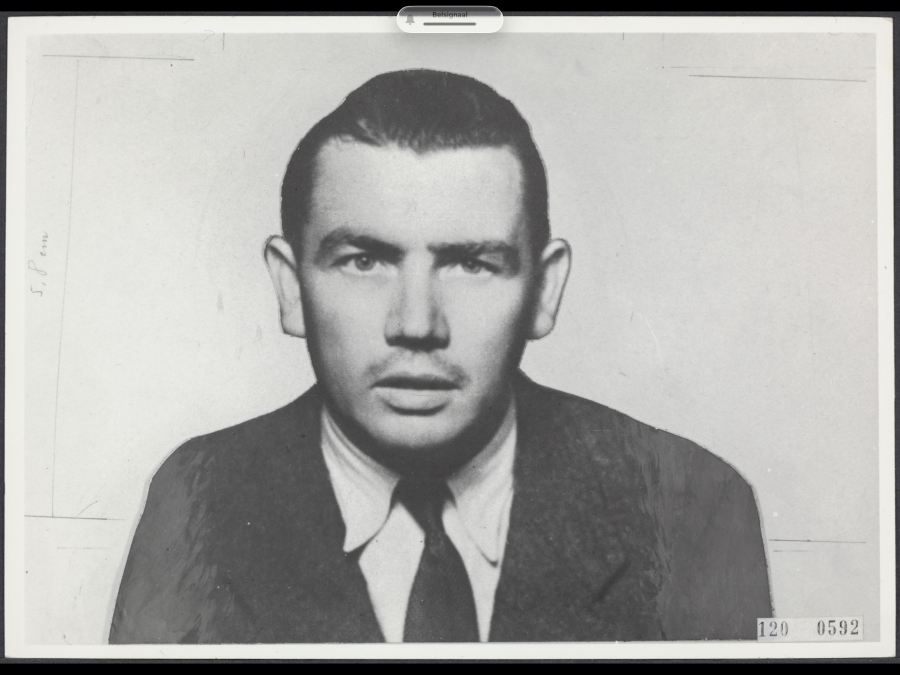
That is where Christiaan Antonius Lindemans enters the story.
A huge man, resistance fighter, adventurer, smuggler, secret agent and, ultimately, traitor.
His nickname was King Kong.
What we know
Lindemans was initially active in the resistance. He helped people escape, worked with resistance groups in the Netherlands, Belgium and France, and built a reputation that would later make him extraordinarily valuable.
Because people trusted him.
Even when he had already begun working for the Germans.
That much is no longer seriously disputed. Lindemans became a double agent and maintained contact with German intelligence services. Dutch post-war security records describe him as a man who had initially performed valuable work for the resistance, but later went over to the Germans.
We also know that he gained access to circles around Prince Bernhard.
After the liberation of Brussels, Bernhard established his headquarters at Château Wittouck, south of the city. Lindemans appeared there. He enjoyed sufficient trust to be assisted and recommended by people in Bernhard’s circle. The Dutch National Archives even records that Bernhard offered him a position on his staff.
That trust was not superficial.
Reserve Captain Kas de Graaf, a member of Bernhard’s staff, knew Lindemans from the resistance. Lindemans had previously helped De Graaf during his escape from occupied territory. On 22 September 1944, De Graaf wrote a letter of recommendation for Lindemans in which he stated that he personally vouched for him.
Except that by then King Kong was no longer the man they thought he was.
What we think we know
And now we arrive at the days immediately before Market Garden.
Lindemans crossed into occupied territory and spoke to the Germans.
It happened at almost the worst conceivable moment: just before one of the largest Allied operations in Western Europe was about to begin.
That creates an almost irresistible thought.
He must have known.
He knew people around Bernhard. He moved in Allied circles. He worked for the Germans. And shortly before Market Garden, he crossed to the other side of the front.
Then, at Arnhem, the British encountered much heavier German opposition than they had expected.
The pieces seem almost to fall into place by themselves.
But history is not a jigsaw puzzle in which pieces that fit neatly together necessarily belong together.
The Dutch National Military Museum puts it carefully: Lindemans had access to Prince Bernhard’s headquarters and may have gathered information about Market Garden there. Whether he actually did so has never been established.
That single word — may — matters.
What we do not want to know
Perhaps this is the most uncomfortable part of the story.
Because even if King Kong did not betray Market Garden, something remains.
How did this man get so close?
Lindemans was not a German spy sent from Berlin with a meticulously constructed false identity who somehow infiltrated Allied headquarters.
He came from the resistance.
He knew the right people.
He had helped people.
People owed him.
And trust was passed from one person to another. Someone knew him, someone else vouched for him, and therefore the next person trusted him too.
That happened within Prince Bernhard’s circle as well.
Kas de Graaf’s letter of recommendation may therefore be more revealing than the question of whether Lindemans ever saw a map of Market Garden. De Graaf wrote that he personally vouched for Lindemans.
There is another history hidden there, less spectacular perhaps, but more interesting.
Not the story of one brilliant double agent stealing the great secret.
But the story of an organisation in which personal trust could sometimes take the place of security.
And after the war another uncomfortable situation arose.
There were rumours about King Kong, Market Garden and the Prince’s headquarters. Investigations followed. Security-service files existed. There were British documents. Questions were raised in parliament. Decades later, further material was released.
The story refused to disappear.
Perhaps precisely because there was never a definitive answer.
What is not true
And then there is the best version of the story.
King Kong walks into Prince Bernhard’s headquarters.
He sees the secret plans for Market Garden.
He steals them, copies them, or memorises them.
He crosses the lines.
He tells the Germans that British paratroopers are going to land at Arnhem.
The Germans prepare.
The British land.
Arnhem is lost.
A wonderful story.
Except that we cannot prove it.
Material released later did not establish that, before crossing into German-held territory, Lindemans had obtained the Market Garden plans from Bernhard’s staff. Nor did subsequently released material prove that information about the planned attack on Arnhem had been passed to Lindemans from Bernhard’s headquarters.
And with that, the simple conclusion also collapses:
Market Garden failed because King Kong betrayed the plan.
There is no convincing evidence for that.
German armoured formations were already in the Arnhem area. Allied intelligence underestimated or insufficiently acted upon their presence. Communications failed. XXX Corps had to advance over a long and extremely vulnerable single corridor. The airborne landing zones were far from the Arnhem bridge. German commanders reacted quickly and effectively.
There are more than enough explanations for the failure of Market Garden without King Kong.
And Prince Bernhard?
Here too, distinctions matter.
That Lindemans had access to Bernhard’s circle is not a myth.
That members of Bernhard’s staff trusted him is not a myth either.
But there is no convincing evidence that Prince Bernhard personally gave Lindemans the plans for Market Garden.
That difference is crucial.
Otherwise, a demonstrable security failure gradually turns into a much larger claim: Bernhard’s headquarters leaked Market Garden, and Arnhem was lost as a result.
The surviving evidence does not justify that conclusion.
King Kong died — the story did not
Lindemans was arrested in October 1944.
He would never fully account for his actions before a Dutch court.
In July 1946, shortly before he was due to stand trial, he died in custody from poisoning. His death, too, generated questions and stories.
And so history acquired exactly the ending a legend needs.
The most important witness was dead.
The files were secret.
A prince was involved.
A great military operation had failed.
And somewhere between Brussels, Driebergen and Arnhem walked a double agent called King Kong.
Perhaps he told the Germans something.
Perhaps he knew more than could later be proved.
Perhaps, after the war, some people preferred not to look too closely at how he had managed to gain access to the highest Dutch military circles.
But there is one thing we should not do.
Turn the word perhaps into the word therefore.
That is the difference between a compelling story and history.
What we know: King Kong was a double agent who came dangerously close to the Allied and Dutch military establishment.
What we think we know: he may have known something about the coming operation and may have discussed it with the Germans.
What we do not want to know: a traitor apparently did not need to break into a secret headquarters. People who trusted him opened the door.
What is not true: that it has been proven that Prince Bernhard gave him the Market Garden plans and that King Kong therefore caused the failure at Arnhem.
The reality is less spectacular.
But perhaps that makes it all the more disturbing.

Comments